Stop Being Nice: 7 Brutal Lessons From 10,000 Hours in Sales
This isn’t a job. It’s psychological warfare. And if you’re soft, you’ll lose.

I’ve spent over 10,000 hours in enterprise sales. Closed million-dollar deals. Lost “sure things.” Got ghosted more times than I can count.
Everyone wants to talk about the dopamine hit when a deal closes. Nobody talks about the entropy. The grind. The mental DOMS. The kind of repetition that breaks most people - or builds something cold and surgical inside the ones who stay.
This post isn’t about smiling your way through discovery calls. It’s about holding power. Building edge. Selling like a killer, albeit a charming one, not a puppy.

1. Stop Being Nice
I’m not sure how to tell you this without sounding like the Andrew Tate of Sales but: Nice gets you ghosted. Nice gets you looped in endless “just checking in” purgatory. Nice is weak.
Nice is not the same as kind. Nice is eager to please, quick to say yes, and allergic to discomfort. Kind knows the room, sets the tone, and doesn’t flinch when it’s time to steer.
Nice says, “Thanks for your time.” Strong says, “Let’s get aligned on next steps.”
The best sellers set boundaries, drive meetings, redirect noise, and treat time like capital. They show up with intent.
The best sellers hold boundaries. They set the agenda and stick to it. If something new comes up, they acknowledge it, then slot it separately. They lead calls, not follow energy.
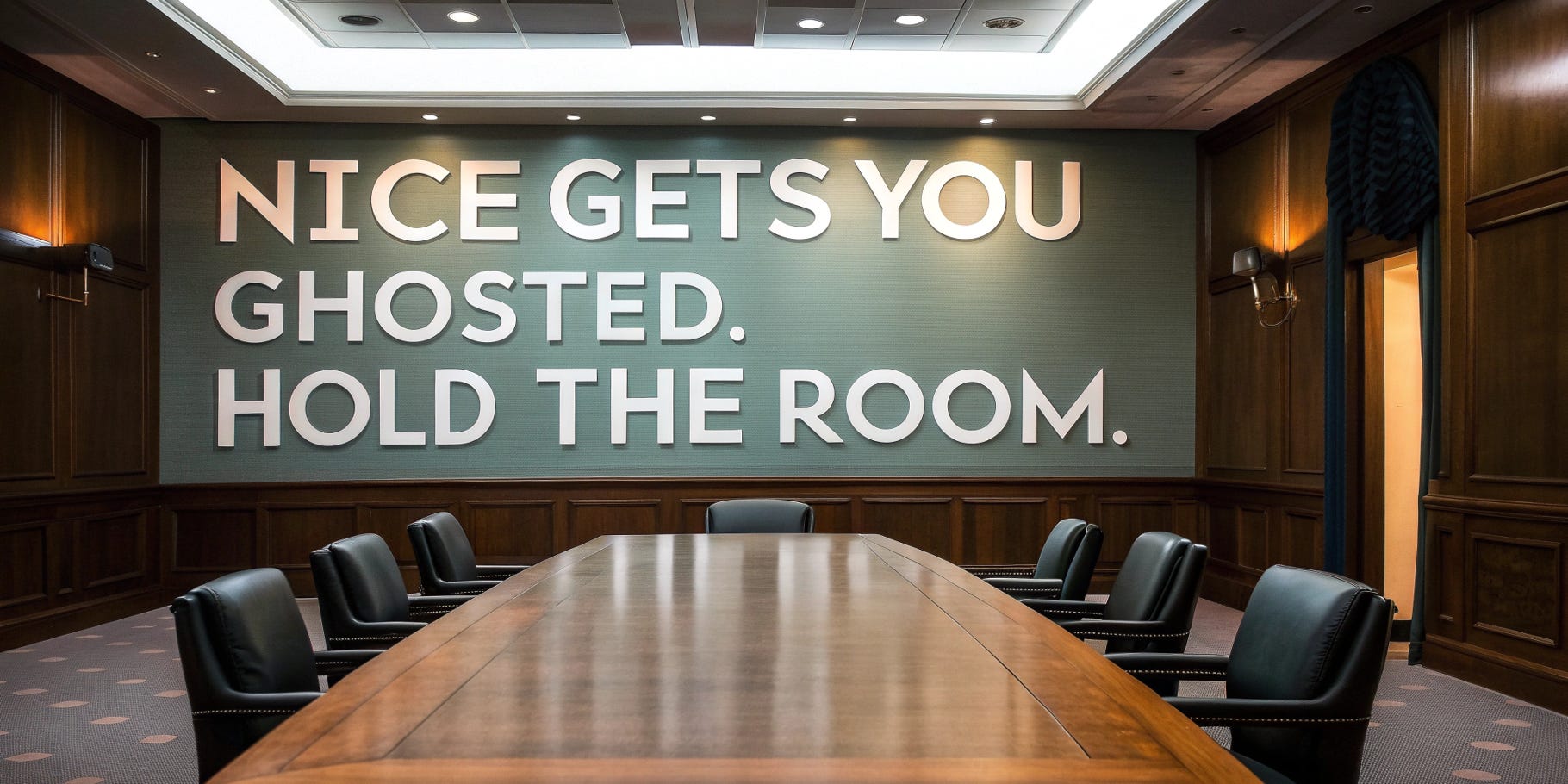
You want to be liked? Go into brand marketing. You want to be remembered? Hold the room.
2. Trust > Likability
People don’t buy because they like you. They buy because they trust you. Being honest - saying “You don’t need this feature” - builds more credibility than a thousand follow-ups or fake enthusiasm. Charm fades. Truth sticks.
Let’s be real: salespeople already walk in with a reputation. Tech teams distrust you. Finance thinks you're fluff. If you're selling AI or ML infra today, your charm isn't getting you far.
What gets you in the room - and keeps you there - is consistency, clarity, and showing up when it counts.

Some of the best relationships I’ve had in sales started with friction. A CFO pushing hard on price. Me holding the line while advocating internally for early access, roadmap features, better SLAs. They saw I fought for my org—but also for them. I gave them honest views, even if it meant risking the deal.
They didn’t always like me. But they trusted me. And when the money moved, they knew I’d show up with integrity.
3. Always Have a Plan B
If you’ve ever banked on a “guaranteed” deal closing EOD, you already know how that story ends.
Hope is not a strategy.
A deal isn’t real until the money lands.
Most teams have deal hygiene frameworks - upside, probable, commit. But frameworks are worthless if you're not honest about what’s real. Take your closure probability seriously. Most of you treat your pipeline like wishful thinking. Stop it.

That "90%" you’ve been telling yourself? Treat it like 60% and plan accordingly.
You want to be confident in your number? Then hunt like a bloodhound and have more than one ace ready to play. And buy yourself the time to use them.
4. Act Like a Partner not a Vendor i.e. Control the Process
Sales is a jungle. Either you’re driving the process or someone else is driving you off a cliff.

If you're not actively managing the speed and structure of the evaluation, your competitor is. Letting the buyer run the show is the fastest path to losing control—and the deal. Doing what they ask, when they ask, without asserting your path makes you a vendor. A replaceable one.
If your product is strong, don’t flinch at evaluation. Propose an RFP. Set clear next steps. Lead the buyer through a decision, not a maze.
The best sellers define the success path and co-own it with the buyer. They educate, steer, push when needed, and call BS when the ask is lazy.
5. Protect Your Thinking Space
There’s always one more follow-up you could send, one more call you could book, one more thing to tweak in a deck. That doesn’t mean you should do it.
Execution without space to think is how you burn out, make bad calls, and lose your edge. Sales rewards sharp instincts - but you don’t sharpen a blade by slamming it against steel all day.
B2B sales is one of the few jobs where, if you deliver, you can tell your manager to back off - and they’ll listen. Use that leverage. Block off time. Guard it like hell.

This is when you plan. Plot. Sometimes it may mean building backup pipeline. Run deal rewinds in your head. Pull out the aces you saved. The best sellers aren’t just hustling - they’re cold, calculated, and two steps ahead.
6. Too Much Choice Kills Conversion
When you give a buyer too many paths, they freeze. Or worse - they pick the wrong one, churn later, and blame you.
This isn’t a buffet. You’re not here to entertain. You’re here to prescribe.
Narrow the choices. Own the recommendation. Frame the decision with confidence.

Most buyers want you to lead. The clarity of a strong POV is what they’re paying for. Freedom? That’s a trap. And it costs you deals.
7. Over-communicate and Rally the org
Great sellers don’t operate solo. They pull strings, stack the bench, and run plays with precision. They sell internally as hard as they sell externally, getting buy-ins from stakeholders - be them commitments from product or ownership from delivery teams.
Enterprise sales is a team sport: if you’re trying to win it alone, you’re toast.
Get marketing to create air cover and drive urgency. Loop in post-sales early to de-risk. Get your CEO to send that one-line nudge when it matters. Use the weight of the org to tilt the room. Over-communicate.
Yes, your pre-sales does not need the whole story, but knowing the whole story is what them invested.
After a certain point, sales often becomes about selling DESPITE the org and not because of it. If you think this is unreal, why do small companies sometimes beat the proverbial Goliaths? Because they are able to get buy-ins from all the stakeholders needed (“the delivery guy is also the pre-sales guy”, ring any bells?).
Big deals are battles, and the way to win them is with alliances. You win them by getting the room behind you.
Be the general. Build the momentum. Close with force.
Conclusion: Build Edge, Don't Beg
This isn’t theory. These lessons were earned the hard way - quota breathing down your neck, deals slipping at the last mile, internal chaos, and pressure that doesn’t care how hard you tried.
Sales isn’t for the likable. It’s for the clear-headed. The ones who lead, not follow. The ones who build systems, hold power, and stay sharp under fire.
Want to win? Stop being nice. Start being dangerous.
If this made you flinch or nod, send it to the rep, founder, or operator who needs to hear it.
📩 Know someone selling under pressure? Send this their way. Or steal it and look smarter in your next team huddle.
🧠 Subscribe for more execution notes from the field. No fluff. Just fire.